Iran proposes BRICS to establish network centered on children’s human capital
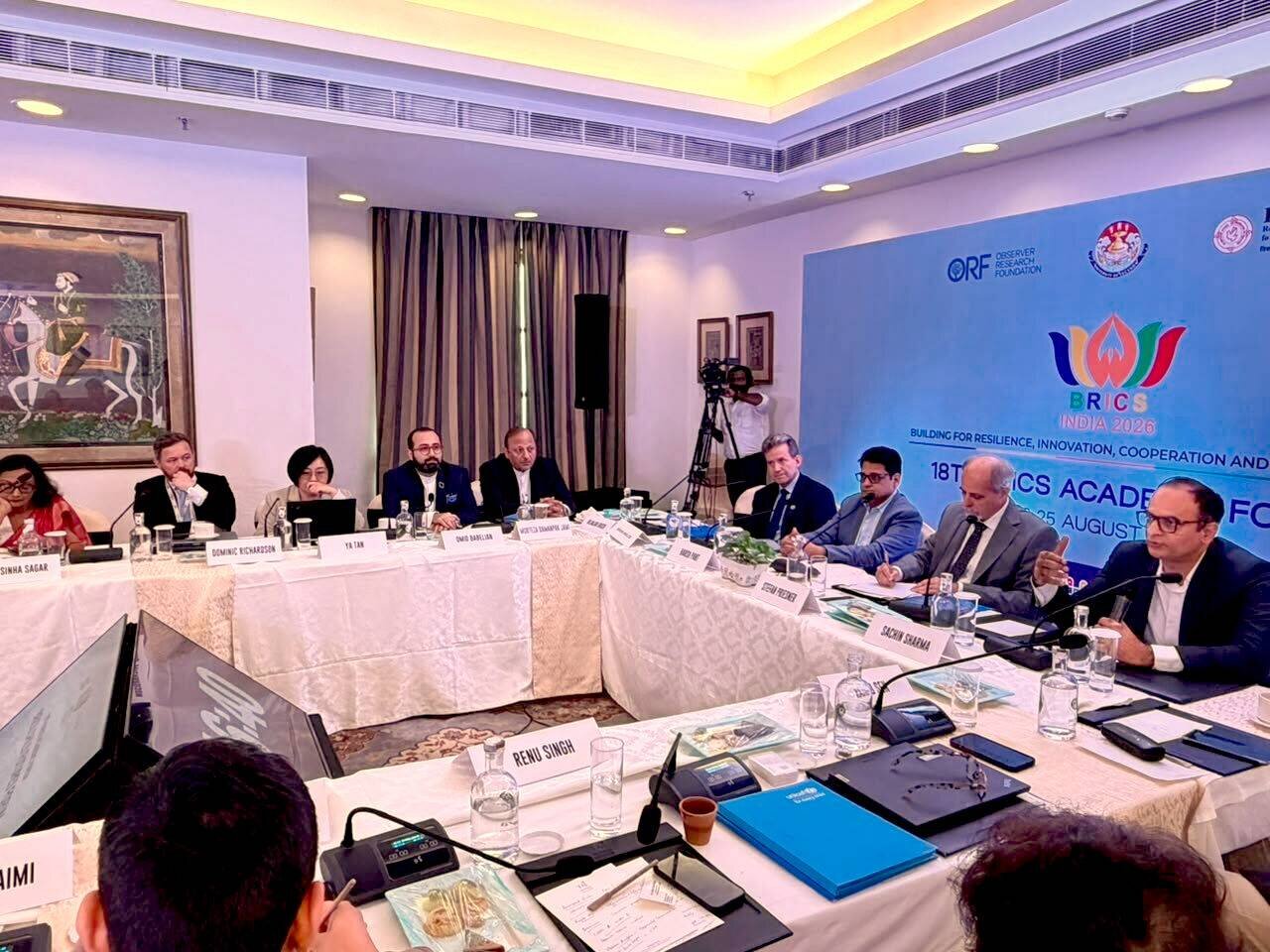
TEHRAN – Iran's representatives at the BRICS Child Futures Forum have proposed developing a BRICS knowledge network focused on children’s human capital.
Hosted by the Observer Research Foundation (ORF) in partnership with the United Nations Children’s Fund (UNICEF), the event was held on the sidelines of the 18th BRICS Academic Forum (BAF), held on August 23 in Lucknow, India.
The forum, titled ‘Investing in Children, Securing the Future: Human Capital for the Next BRICS Decade’, brought together policymakers, researchers, development practitioners, experts and youth representatives to discuss priorities for advancing child and adolescent wellbeing across BRICS. Discussions focused on investing in children as a foundation for human capital, alongside themes of health and nutrition, climate resilience, technology and innovation, youth leadership, and partnerships.
Addressing the forum, Iranian officials, Morteza Daman-Pak Jami, Senior Research Fellow, Institute for Political and International Studies (IPIS), and former Ambassador to Lisbon, and Omid Babelian, Diplomat and Research Fellow, Institute for Political and International Studies, detailed Iran’s perspectives and experiences in safeguarding children and strengthening human capital during crises, IRNA reported.
Daman-Pak Jami suggested that BRICS member states use available capacities, foster collaboration in education, health, youth, universities, science, technology, and social development, and then leverage them to forge a coherent approach to human capital.
Highlighting the importance of the life-cycle approach to human capital development, he stated that investment in human capital must begin in the early years of life and persist through early childhood development, education, skills training, and entry into the labor market.
He also elaborated on the country’s achievements in health and children’s education.
Referring to illegal US-Israel attacks against Iran, he said the war was a blatant violation of international humanitarian law, and highlighted the need for upholding children’s right to education amidst war and crises.
“The attacks on Shajareh Tayyebeh Elementary School in Minab, Hormozgan province, are a typical example of the humanitarian consequences of aggression and violation of children’s right to education and safety.
Schools must be safe environment for the education and upbringing of the next generation under all circumstances. The global community must not remain indifferent to attacks on children and educational institutions,” he further noted.
For his part, Babelian said protection, empowerment, and integration are three principles to strengthen human capital. Children and young people must retain access to education, healthcare, social protection, and essential services during crises, while also having the opportunity to participate meaningfully in shaping their own futures, he added.
“When we speak of human capital, I can no longer think of numbers and charts. For me, human capital has a face: the face of a child sitting in a classroom, a young person in a laboratory trying to discover a better medication, a student dreaming of building a better future, and families that—despite all hardships—still pin their hopes on their children’s tomorrow.
Protecting human capital should not be limited to saving their lives during crisis; it should ensure a future in which they can thrive.”
MT/MG
Leave a Comment