Iraq’s uncertain future amid America’s “withdrawal”
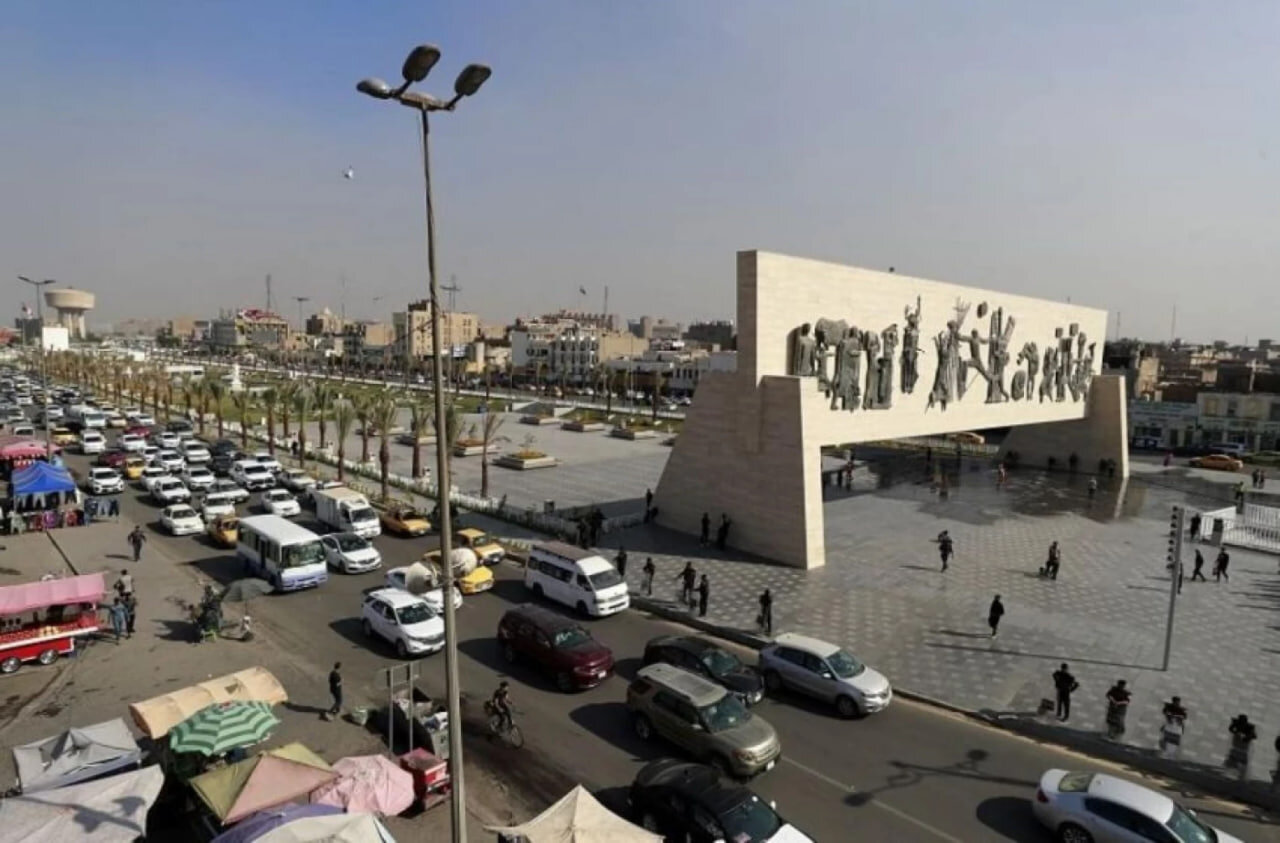
TEHRAN – Iraq’s political, economic, and security fragility amid mounting U.S. pressure threatens its sovereignty and stability, while placing the burden of its accumulated crises on ordinary citizens.
What is unfolding today amounts to a carefully engineered American effort to entangle a state that is being deliberately weakened in a battle to seize a “sovereignty” defined by conditions that Iraqis themselves did not write.
The sensitive matter revolves around the purported U.S. withdrawal from Iraq by the end of September, as well as the U.S. demand that all weapons be placed under state control. It requires dusting off files from the bitter memories of the period Iraq endured: the breakdown of security, sectarian war, political conflict, the near-total absence of public services, and the lack of stable and dignified livelihoods.
Among the issues that have flooded social media and become the subject of public discussion are the following:
The Ba’athist voices: These are the voices of the so-called “return” project, which the former executioners of Iraq hope to use to pour the oil of a tried-and-tested alternative onto the fire of the neighboring enemy. In reality, this is nothing more than a convenient scapegoat that does not actually exist.
Jurf al-Nasr: A card being sharpened and wielded to reignite sectarian war. Jurf al-Nasr is the closest area to the capital Baghdad that Daesh reached in the summer of 2014. At the time, some members of the terror group were falsely accused of belonging to Sunni tribes.
Political failure: Something that observers of Iraq’s political scene have come to recognize before, during, and after every government, albeit with different timing, implications, and consequences arising from the actions of the U.S. architects of Iraq’s “emerging democracy.”
Security and public-service failures: This is a particularly sensitive issue that conceals the backbone of Iraq’s post-2003 crisis. Despite the abundance of logical and realistic avenues for addressing it, there has been a failure to produce fundamental solutions capable of removing the country from the weaknesses and vulnerabilities created by a political mindset that monopolizes decision-making and planning, sidelines competence and professionalism, and creates a corrupt environment in which reconstruction and development projects are exploited.
Reviving the specter of protests: The fact that the scale of protests in Baghdad and other provinces is rising as the countdown to September starts is hardly a coincidence. It appears to involve a calculated effort to exploit the situation. The demands themselves are realistic and legitimate, making them an ideal gateway for turning the protests into a national security threat. The events of October 2019 offer a clear lesson in how popular anger can be provoked and then exploited with outside interference.
The timing of the U.S. withdrawal represents an attempt to rearrange Iraq’s internal and external cards by exploiting the pressure points of the economy and sectarianism.
Because Iraq is dealing with a web of actors and forces, it must also be examined by the influences surrounding them. The latest statement by Kataib Hezbollah, delivered by its security official Abu Mujahid al-Assaf, confirms the position of the Iraqi resistance: an agreement to disarm would leave Iraq defenseless, with no internal protector, while facing accelerating economic hardship and an unrelenting sectarian conflict.
What is truly striking is not the tone or timing of the statement, but the silence hanging over the many political forces and parties that claim to be “patriotic.”
Why do they not tell the people the truth about what is happening? And why this abandonment? Do the Iraqi people deserve this kind of unspoken abandonment? Are they to be left with the politicians they entrusted with at the helm, sailing them toward shores where dignity and honor are replaced by humiliation, internal bloodshed, and submission to American dictates?
The truth is that this silence does not reflect helplessness; rather, it reflects an implicit agreement to “let matters take their course.”
It is as though there is a broad understanding, even if it has never been publicly declared, that the state will be weakened, the resistance will lose its weapons, and society will remain divided along sectarian lines. Why? Because this reality both serves and harms different interests at the same time:
The United States exits the immediate sphere of responsibility and leaves its regional and Persian Gulf allies to manage affairs. It remains in the control room without stepping onto the battlefield except on its own terms. This is the first crucial objective.
It then moves to the second phase of the project: turning Iraq into a staging ground and supply base for the decisive confrontation with the Islamic Republic of Iran. That is the second crucial objective, because Iraq would become Iran’s most dangerous flank in terms of national security.
The political parties retain their political influence, even if the state itself is weakened, while the resistance remains a form of “legitimate opposition.”
The court preachers and corrupt crisis profiteers will control a significant portion of the media machinery, in particular U.S.-funded TV channels, which have already embarked on multiple campaigns of intimidation and misinformation, thereby creating the appropriate ground for translating these forces and interests into action.
This scenario is not the product of a conspiracy. Rather, it is the result of intersecting interests and circumstances that have imposed themselves on Iraq.
The United States wants to gradually weaken Iraq; Iran is preoccupied with its war with the United States and the Zionist regime in addition to economic warfare; some Persian Gulf states want an opportunity to weaken the anti-Israeli Shia alliance, even if indirectly.
Iraq, as both a state and a people, therefore remains the loser, stripped of the political courage and strategic foresight needed to say “no” to U.S. pressure. And this is precisely what Washington needs from any state: a “legitimate” government that carries out “orders” without argument.
This is particularly dangerous because the line separating the illegal war being waged against Iran from the war being waged against Iraq has become increasingly blurred. After the United States failed to achieve its objectives through its broader confrontation with the Islamic Republic, the campaign of economic terrorism failed to bring down Iran, while military action failed to produce a decisive victory, it turned toward a policy of “encirclement from the periphery.”
And because a “weak” Iraq, which shares both a border and a cultural and religious heritage with Iran, has become the ideal instrument, it will serve as a chess piece in the pressure campaign against Tehran. In this way, Iran will once again find itself surrounded.
This approach also encourages Washington’s sectarian partners to stoke the embers of Sunni-Shia conflict. Added to this is the revival of Ba’athist rhetoric, not to remind people of the past for purposes of comparison, but to summon its ghosts to frighten the present.
Economic collapse as a weapon of war
Because hunger and austerity have become America’s alternative armies to conventional military force, the U.S. architects of this project have planted in the path of Iraq’s future: the threat of economic collapse, hunger, and the withholding of salaries.
This is a grim possibility for a state that depends almost entirely on oil revenues and is already struggling even to pay public-sector salaries; a state whose currency has weakened against the dollar and whose streets are angry over the rising cost of living. Moreover, the solutions proposed by the World Bank and the International Monetary Fund are the same old prescriptions: reducing public spending, meaning, in practice, cutting salaries; opening markets, meaning allowing foreign goods to destroy domestic industry; and implementing “liberal” reforms, meaning turning the state into an intermediary for foreign capital.
The inevitable result of this convergence, entrenchment, and mutual exploitation at the expense of the country’s higher interests will not be a stable Iraq. Instead, Iraq will become an arena for conflict managed by others, while an illusion of a nonexistent national debate is maintained.
The reality is that decisions are being made in Washington, while those inside Iraq simply watch.
Even more dangerous is that a new generation will grow up under these conditions without knowing what it means for Iraq to be an independent state. It will encounter the word “sovereignty” in a dictionary rather than experience it in public life.
This is especially significant at this critical juncture, which differs from what came before because, for some of those occupying positions of decision-making, the available choices are increasingly moving toward sliding rather than resisting, surrender rather than struggle, and accepting a secondary role rather than reclaiming a leading one.
Every choice has a price. When a ruler, regardless of the position they occupy, forgets that the people are the true source of authority and that they are purely their representative, society does not suffer simply from a political crisis; it suffers from a civilizational crisis for which there is no remedy except rebuilding from the roots.
And that is precisely what America seeks to design according to the measurements of its own interests. Standing in its way are men who refuse to lay down their arms, prepared to use them until true sovereignty returns to a country that has seen and overcome one crisis too many since the 2003 U.S. led invasion.
Leave a Comment