How Trump uses the “Peace Council” to reshape global order
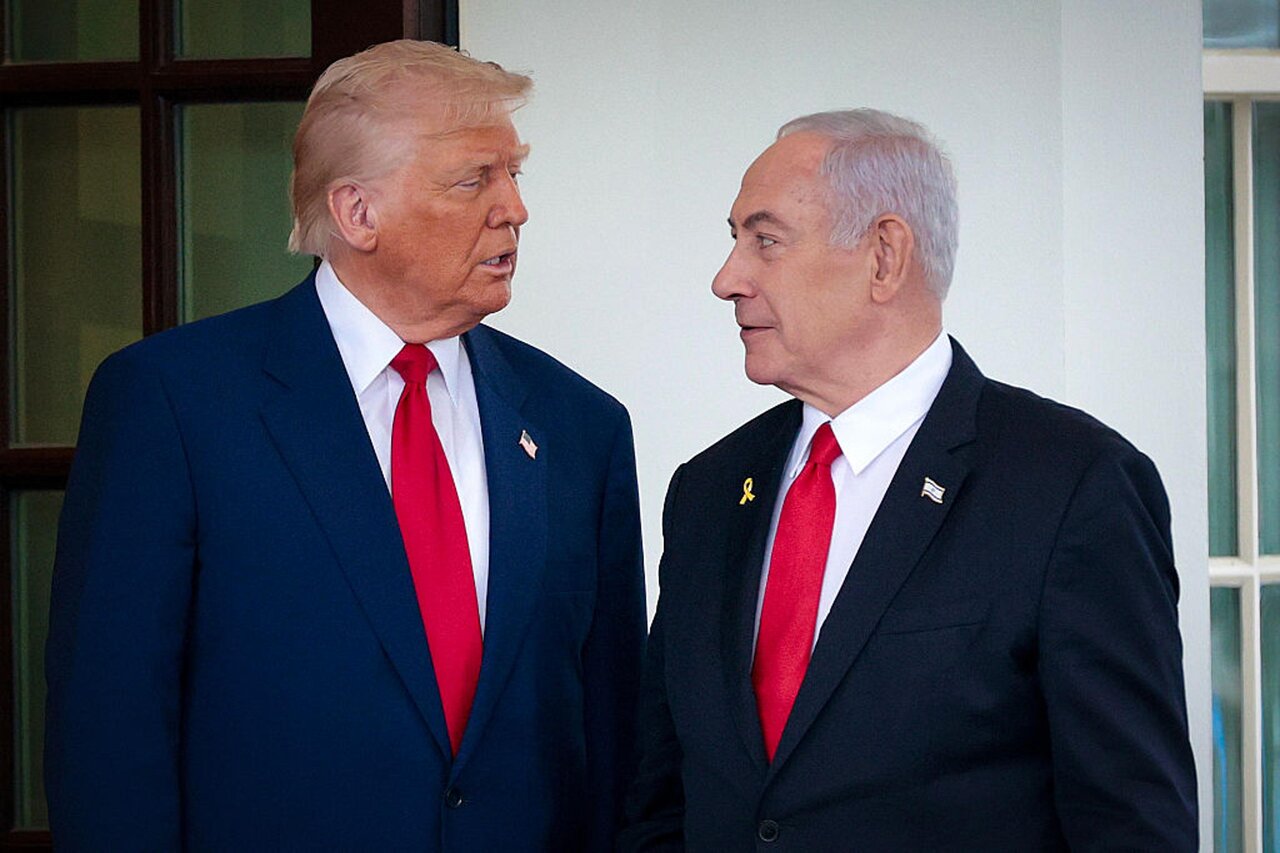
Since his re-election to a new term, Trump has vigorously pursued a unipolar American domination of the world through a series of policies. Among these were his attempts to replace the UN with the Gaza “Peace Council”.
The body is ostensibly designed to serve as an alternative to the United Nations by creating an international platform where the final word rests solely with the United States and Trump personally. In doing so, Trump seeks to obstruct the emergence of a multipolar world order championed by both Russia and China, prompting both powers to oppose the establishment of such a council.
What is striking, however, is that the United States is not only targeting its perceived adversaries, China and Russia, but also European powers, notably Britain, France, and Germany.
While Washington previously accepted a European role in a global governance body like the UN, driven by its post-WWII strategy to contain the Soviet Union, it now, under its push for unipolar dominance, aims to strip European nations of any global standing.
Institutionalizing Trump’s discretionary “Peace Council” would create an alternative global government to the UN, thereby nullifying the active role France and Britain currently play and denying Germany the recognition it seeks as a meaningful player within the international organization.
The “Peace Council” as a tool for EU national interests
The establishment of the “Peace Council” has raised concerns among several European states due to the potential rebalancing of influence within global governance.
The structure is likely to become a U.S. instrument for curbing the European Union’s decision-making authority on international security matters, conflict resolution, and financial resource allocation.
Many European politicians have voiced similar criticism of the White House initiative. Belgium’s foreign minister, commenting on the “Peace Council” proposal, stated that Trump is attempting to create a parallel international mechanism to replace the existing UN system.
For the Belgian minister, transferring key decision-making processes from established international institutions to a structure shaped primarily by U.S. influence could disrupt equal representation and significantly diminish the role of “middle powers.” In this vein, Belgium’s hesitation to endorse such an American approach reflects its desire to preserve an international order grounded in collective decision-making.
EU High Representative for Foreign Affairs and Security Policy, Kaja Kallas, also criticized the “Peace Council” initiative, warning that it had become a personal vehicle for President Trump that bypasses the UN mandate, removes accountability to Palestinians and the UN, and risks becoming a unilateral forum that concentrates authority in American hands.
This is particularly sensitive for the EU, whose member states heavily rely on the U.S. for security and defense issues. Thus, the “Peace Council” can be viewed as yet another tool for institutionalizing American leadership, potentially further constraining the EU’s capacity to pursue an independent foreign policy.
Consequently, establishing a “Peace Council” along the lines proposed by the U.S. has created an asymmetric model of global governance where a state’s real influence on decision-making is determined not by sovereign equality but by the political weight of the most powerful nation. This has inevitably restricted European countries’ ability to initiate and shape decisions on issues directly impacting their security and national interests.
Undermining European unity and security
On January 22, 2026, Trump convened the inaugural meeting of the “Peace Council” on the sidelines of the World Economic Forum in Davos.
For Europe, this posed a threat to the foundations of regional stability, particularly in Eastern Europe. This was most evident in Poland, where Trump placed President Karol Nawrocki in an awkward position by pressing him to support the council.
The Polish president found himself in a dilemma: rejecting Trump’s call would damage Warsaw’s relations with Washington, while accepting it would heighten tensions between Warsaw and the EU, negatively affecting stability across Eastern Europe.
Nawrocki chose a middle path, refusing to attend the council’s opening and instead sending a representative as an observer. Nevertheless, discord emerged among EU members, exposing the fragility of Europe’s existing security mechanisms.
The U.S. administration views the “Peace Council” as a potential UN replacement and intends to expand its mandate to resolve military conflicts, a prospect that has deeply alarmed European leaders.
For Eastern European states, the creation of a parallel body delivers a double blow. It would weaken established institutions where these countries already have a voice and can advance their interests. Additionally, it would generate contentious issues, such as council membership, eroding collective solidarity among EU member states, and pushing them toward bilateral agreements with Washington, thereby bypassing the overarching European policy framework.
Marginalizing Europe and Arab states on Palestine
Europe finds itself directly concerned with the Palestinian issue, given its explosive nature and potential to negatively impact Eastern Mediterranean security, thereby affecting stability in Southeastern Europe.
However, the United States, through its unequivocal bias toward Israel, seeks to sideline the European role, one that the regime does not welcome in the first place.
Washington aims for the “Peace Council” to undermine UN resolutions favoring the Palestinian people and their right to an independent state, while also marginalizing Europe’s involvement in the Palestinian cause, which has primarily operated through the UN framework.
Consequently, the “Peace Council” completely disregards the principle of Palestinian self-governance, which could serve as a precursor to establishing an independent Palestinian state.
While Arab states have affirmed that normalizing relations with the Zionist regime does not mean abandoning the Palestinian cause, Trump’s creation of the “Peace Council” contradicts this stance. Despite the council’s executive body, the U.S. administration is essentially the key decision-maker.
The Palestinian Authority in Ramallah and the parties in Gaza have been effectively sidelined, relegated to the status of implementing agencies on the ground.
Moreover, Arab public opinion views the “Peace Council” not as a peacekeeping body but as an externally imposed administration over Gaza serving the Zionist regime’s interests. Arab capitals cannot openly back a structure that denies Palestinians self-determination, as that would appear as a rejection of a sovereign Palestinian state.
Furthermore, Trump’s “Peace Council” has dealt a severe blow even to the “Abraham Accords,” replacing the principle of voluntary regional partnership with harsh American dictates. While the 2020 agreements were built on the Israeli regime’s organic integration into the region through shared business, technology, and intelligence, the new council has concentrated West Asian governance in Washington’s hands. Regional leaders have been marginalized, reduced simply to advisors.
The key factor in overturning the previous framework (Abraham Accords) was the warning mechanism adopted by the U.S. president. He effectively blackmailed Persian Gulf states by compelling each to pay one billion dollars for permanent membership, forcing Arab monarchies to finance Gaza’s reconstruction without granting them any decision-making role.
Additionally, the complete disregard for the Palestinian Authority and its exclusion from any council role obstructed Saudi Arabia’s entry into the “Abraham Accords” and hindered Riyadh’s normalization with the Zionist regime.
In turn, the “Peace Council” has paralyzed existing diplomatic relations. As a result, the nine countries that had previously normalized ties with Israel, including the UAE, Bahrain, and Morocco, found themselves compelled to freeze their relations with the regime, at least publicly.
Additional reasons for European and Western opposition
For Europeans and Westerners generally, Trump’s initiative to create a “Peace Council” for Gaza reconstruction is considered impractical.
Analysts at the Financial Times have noted that the Gaza “Peace Council” faces a crisis due to a lack of transparent funding. The $17 billion in announced pledges was never deposited into the World Bank trust fund as planned. Instead, the council has collected only modest sums, including roughly $20 million from Morocco and $100 million from the UAE, through a private JPMorgan Chase account, raising serious concerns about financial accountability.
This, predictably, has obstructed Gaza reconstruction projects. For this reason, according to Reuters journalists, the U.S. is considering asking the Israeli regime to divert $5 billion in tax revenues collected from the Palestinian Authority in the occupied West Bank to fund the “Peace Council” instead of financing the PA’s budget.
American experts have criticized Secretary of State Marco Rubio’s statement that the council’s mandate would expand “to include other complex and difficult situations beyond Gaza’s reconstruction.” Critics view this goal as unachievable, as it has always been, conflicts in West Asia have not ceased since the council’s establishment.
Moreover, several key U.S. NATO allies have declined to join Trump’s initiative. Britain, France, Germany, Italy, Spain, Norway, and Sweden are all concerned by suggestions that the “Peace Council” represents a White House attempt to create a UN alternative.
Western European analysts have pointed out that the council’s Gaza “reconstruction” plan primarily focuses on Jared Kushner’s project for a high-tech tourist destination “filled with skyscrapers,” rather than addressing the needs and desires of Palestinians whose homes, schools, and hospitals were destroyed during the U.S. backed genocide.
Through the “Peace Council,” Trump seeks to entrench unipolar American leadership of the international order at the expense of the UN, while marginalizing the international community.
The council has Increased instability and violence throughout West Asia and threatens European stability, unity, and the autonomy of its security decision-making, especially in Eastern Europe, while reducing European and Arab roles in the Palestinian liberation struggle.
Opaque funding, an expanding mandate, and the exclusion of Palestinian representation have fueled Western and regional fears that the council has become an American tool for reshaping global governance to serve U.S.-Israeli interests.
Leave a Comment