MAHAK builds a broader ecosystem around pediatric cancer care
TEHRAN - The Society to Support Children Suffering from Cancer, widely known by its acronym MAHAK, was established in 1991 as a non-governmental and non-profit organization.
Its logo, a leaf symbolizing life, depicts a child and family standing upon it with hope.
Since its inception, MAHAK has relied solely on public donations, benevolent intentions, and voluntary contributions. Within less than a decade, MAHAK succeeded in improving children’s recovery rates by applying scientific and specialized methods in caring for patients and their families, while also earning the trust and support of the public as well as the tireless efforts of volunteers.
MAHAK’s activities fall into three main categories: Charity, Hospital, and Research. These efforts exclusively serve children with cancer in areas such as medical care, prevention, treatment, healthcare, and welfare services. MAHAK’s slogan, “Help us and let us help you,” reflects the essential role of civil society in supporting humanity with love and compassion.
By 2025, MAHAK had provided comprehensive support to over 45,000 children with cancer and their families across Iran.
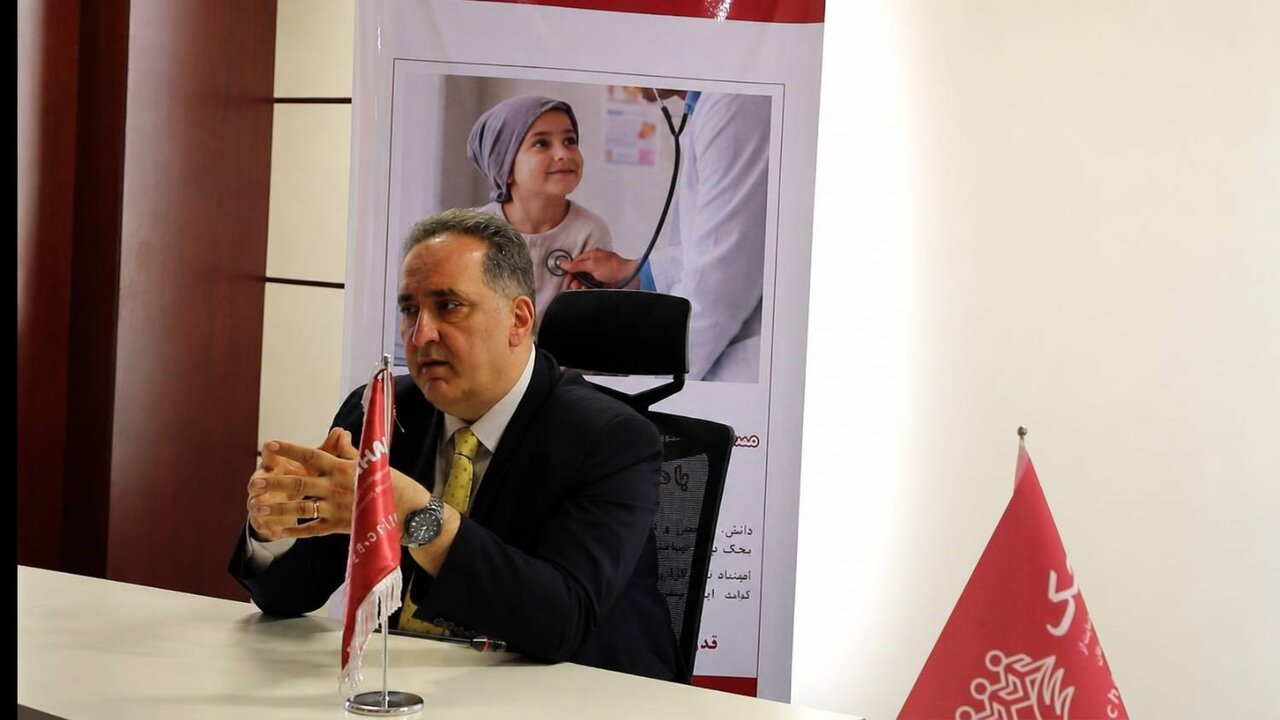
In an exclusive interview with the Tehran Times, Arasb Ahmadian, the chief executive officer, elaborated on MAHAK’s role in the global fight against childhood cancer, how it integrates psychological and social support into cancer care, the role of emerging technologies, artificial intelligence, and digital health in the future of cancer care at MAHAK.
MAHAK has developed an integrated model that combines medical treatment, psychosocial and family support, public awareness, research, advocacy, and international cooperation.
One of MAHAK’s most important contributions is its emphasis on comprehensive and patient-centered care. The organization initially focused on supporting families of children with cancer, including providing accommodation for families who had to travel to Tehran for their children’s treatment.
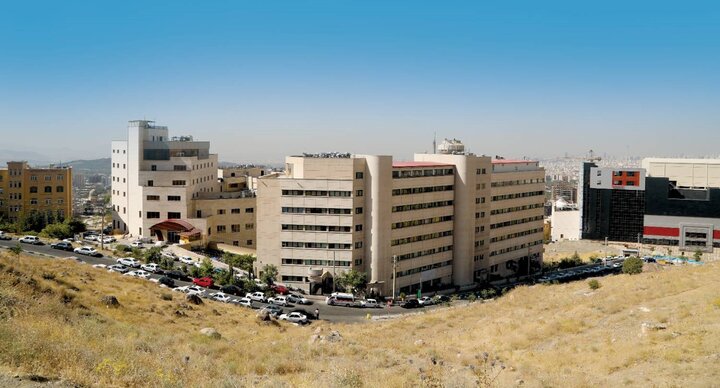
As the organization developed, this approach expanded into the establishment of a specialized pediatric cancer hospital and treatment center, providing diagnostic, therapeutic, and supportive services.
This integrated approach is particularly relevant to the global childhood-cancer agenda. In this respect, MAHAK’s experience demonstrates how a civil-society organization can contribute to building a broader ecosystem around pediatric cancer care.
The distinctive feature of MAHAK is its attempt to address the medical and social dimensions of childhood cancer simultaneously. Many childhood-cancer charities primarily concentrate on fundraising, awareness, or family assistance, while MAHAK has developed an ecosystem in which financial support, medical services, family assistance, awareness campaigns, research, and professional collaboration are interconnected.
Therefore, MAHAK’s role in the global fight against childhood cancer can be understood as that of a patient- and family-centered civil-society organization that connects charity, healthcare delivery, social support, awareness, research, and international collaboration.
Rather than viewing childhood cancer solely as a medical problem, the MAHAK model treats it as a multidimensional social and healthcare challenge. This perspective is consistent with the broader global movement toward equitable access to quality pediatric cancer care, in which international cooperation, capacity building, family engagement, and knowledge sharing are increasingly considered essential components of improving survival and quality of life.
Integrating psychological and social support into cancer care
MAHAK’s approach is based on the principle that treating childhood cancer is not limited to medical intervention. A diagnosis of cancer can affect a child’s emotional well-being, family relationships, education, financial stability, and ability to cope with a long and demanding treatment process. MAHAK therefore seeks to integrate psychological and social support with medical treatment rather than treating these services as separate or optional forms of assistance.
An important aspect of this approach is that psychological care is not restricted to children. Parents and caregivers are also considered part of the care process because their emotional condition, ability to cope, and understanding of the illness can influence the child's experience of treatment. MAHAK has consequently focused on integrating psychological and social-work services into its broader support system.
The psychosocial model at MAHAK also includes a substantial social-support component. Its services extend beyond the hospital itself and include support for families receiving treatment in public and university hospitals across Iran. MAHAK's support has included assistance with treatment costs, medicines, transportation, and accommodation for families who have to travel for specialized treatment.
Another important characteristic of MAHAK's approach is multidisciplinary cooperation. Psychological and social support is intended to operate alongside physicians, nurses, and other healthcare professionals rather than independently of the medical team.
Preserving the child's quality of life and sense of childhood
MAHAK's approach also recognizes that children with cancer remain children first. Its activities seek to preserve opportunities for children to experience normal childhood emotions and activities despite the restrictions imposed by illness and treatment. MAHAK has explicitly emphasized the importance of creating positive memories for children so that their experience of childhood is not defined exclusively by pain and medical procedures.
This perspective is consistent with the broader international understanding of psychosocial pediatric oncology, in which quality of life, emotional adjustment, family functioning, and the child's ability to cope with treatment are considered important outcomes alongside survival.
The significance of this model is that it addresses the whole experience of childhood cancer. The disease affects the child's body, but its consequences extend to emotions, family relationships, education, finances, and social life.
Role of emerging technologies
The future of childhood cancer care at MAHAK is likely to be increasingly influenced by digital transformation, artificial intelligence (AI), telemedicine, and data-driven healthcare. These technologies should not be viewed as replacements for physicians, nurses, psychologists, or social workers; rather, their greatest potential lies in strengthening MAHAK’s existing integrated model of care and making specialized services more accessible, personalized, and continuous.
AI could become particularly important in areas such as diagnosis, risk assessment, treatment planning, prediction of complications, and analysis of medical data. International research in pediatric oncology has already identified applications of AI in diagnostic and prognostic decision-making, although the evidence is still developing and implementation requires careful validation.
AI could also support MAHAK's psychosocial model. For example, digital systems could help identify changes in reported symptoms, emotional well-being, treatment adherence, or quality-of-life indicators and alert healthcare professionals when additional intervention may be appropriate.
Another major opportunity is the development of patient-centered digital health platforms. Mobile applications could enable children and parents to record symptoms, medication schedules, side effects, appointments, and other aspects of their treatment journey.
Digital transformation could also strengthen MAHAK's capacity for research and personalized cancer care. A well-designed clinical database can bring together information about diagnosis, treatment, outcomes, complications, and long-term follow-up.
Photo 1: Arasb Ahmadian, the chief executive officer of MAHAK
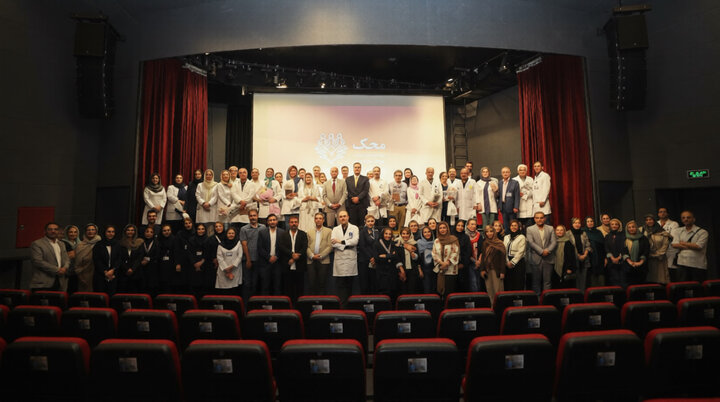
Photo 2: Managers and staff of MAHAK pose for a photo to celebrate National Doctor's Day on Sunday, August 23.
Photo 3: A view of MAHAK hospital in northern Tehran
Leave a Comment