Miscalculation after miscalculation
TEHRAN - Although some great powers have been humiliated by less powerful nations in the wars they have launched against them, after some years, they unexpectedly return to the same old policies and start new wars.
These wars take place despite stern warnings by other countries and opposition at home.
The United States was forced to leave Afghanistan after 20 years in a humiliating manner in 2021. The U.S. also launched a war against Iraq in March 2003 despite the formidable denials by the UN nuclear watchdog that Iraq did not possess weapons of mass destruction. However, the George W. Bush administration did not listen and attacked Iraq, which led to indescribable human tragedy and the spread of terrorism in the region.
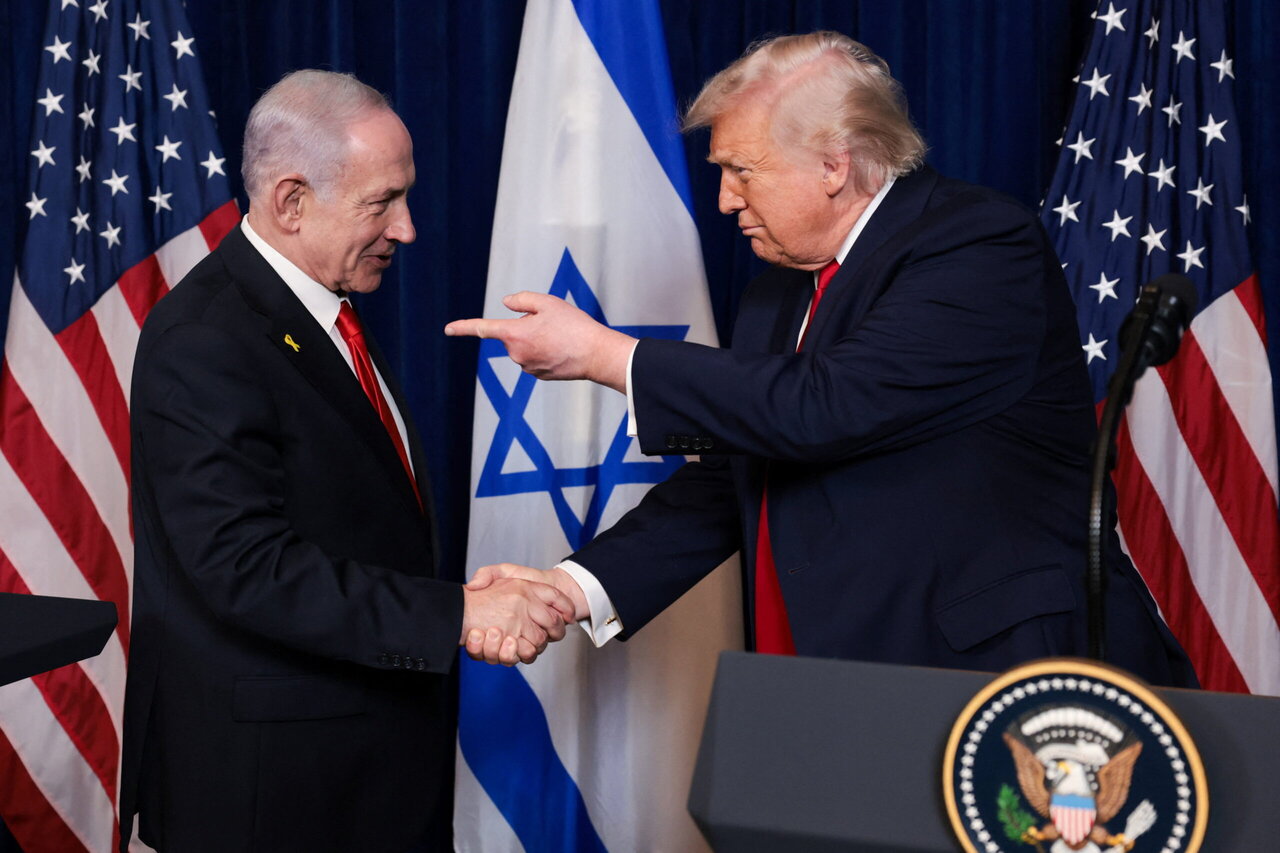
Yet, President Donald Trump, who was complaining about his country’s endless wars, started an unwarranted war against Iran on February 28 in cooperation with Israel. This followed a 12-day Israeli war against Iran in June 2025 with the cooperation and participation of the U.S.
The Trump administration, emboldened by the capture of Venezuelan President Nicolás Maduro in early January 2026, suffered from the illusion that it could easily topple the ruling system in Iran within days or weeks. The administration viewed Iran as a target that could be easily subdued, in part banking on domestic discontent over economic hardship caused by the crippling U.S.-led sanctions imposed on the country.
Mehran Kamrava, a professor of government at Georgetown University Qatar, says Iran has given the U.S. and Israel a “bloody nose” by stating that it managed to demonstrate meaningful leverage during the war.
“Iran has managed to give both the United States and Israel a bloody nose, and it has managed to demonstrate that it has multiple sources of leverage in the Strait of Hormuz, across the Persian Gulf and by hitting American bases,” Kamrava told Al Jazeera.
“Historically, great powers have never been able to attack a weaker state and declare victory, whether it was the Americans in Vietnam, the Soviets in Afghanistan, the Americans in Iraq, or the Russians in Ukraine,” the professor noted.
In response to the illegal February war, Iran responded immediately by hitting American military bases in Arab countries on the southern shores of the Persian Gulf, firing salvoes of missiles and drones at Israel, and closing the strategic Strait of Hormuz, the passageway for about a fifth of global oil and gas supplies.
The current U.S. administration soon realized that it had opened a Pandora's box, which would be much worse than the war it had launched against Vietnam, Afghanistan, and Iraq.
The closure of the Strait of Hormuz sent shockwaves through global energy prices. This caused the Trump administration to face sharp criticism at home and even from its closest allies, including Germany, Britain, Canada, Australia, and others. The world soon realized that they were paying for Trump’s miscalculation and recalcitrance.
Instead of toppling the Iranian establishment in a short time, the war strengthened the Islamic Republic. Moreover, the war displayed the limits of American conventional warfare.
In a commentary published in Foreign Affairs, Narges Bajoghli and Vali Nasr, both professors of Johns Hopkins University, said most of what Trump and his security team said about the war proved untrue.
Trump told reporters on Air Force One in early March that the U.S. has "decimated” what he called Iran’s “whole evil empire”. Several weeks later, he declared “total and complete victory” over Iran.
“Three months in, however, the picture looks quite different. Iran retains its military and industrial capacity,” Bajoghli and Nasr wrote.
In the commentary titled “Iran’s New Grand Strategy,” they also confirmed, “The war has given rise to a new Iran, one that will reshape the Middle East and influence the course of geopolitics for years to come.”
In an article on June 16, senior BBC journalist Jeremy Bowen also said, “The bellicose rhetoric of the U.S. Defense (War) Secretary Peter Hegseth claiming that American power had crippled Iran's armed forces turned out to be exaggerated and untrue.”
Realizing that it had created a self-made trap, the Trump administration has sought to find an exit route. It plans to sign a framework agreement with Iran in Switzerland on Friday, June 19, to officially end the war with Iran and start deliberations over Tehran’s nuclear program, which Tehran has been insisting is purely for civilian purposes.
Bowen also said until this date, the Iran war has been Trump's “worst foreign policy blunder”.
He says the war has “damaged” Washington’s alliances with the oil-producing Arab monarchies of the Persian Gulf, whose business model as “islands of stability” in the turbulence of the Middle East will take years to repair.
“Privately, their officials already talk about diversifying their allegiances, and about the necessity of finding ways to live alongside Iran, its neighbor across the water,” Bowen wrote.
However, the extremists in Israel are seeking to undermine the framework agreement as they are inherently opposed to the Islamic Republic system.
To the surprise of the ultra-orthodox extremists in Israel and the U.S., the world is welcoming the framework agreement. For example, Canadian Prime Minister Mark Carney, speaking to CNN on the sidelines of the G7 summit, said, “We’re very pleased with the deal that’s been struck” and called it a “game-changer”. The G7 leaders also called it a “historic opportunity” and said they support the deal and “are ready to contribute to its implementation”.
It is hoped that the U.S. will stop wrong-headed military adventures and not cause human tragedy, economic and material damage, economic losses, environmental disasters, and many other mishaps for other countries under the influence of its leaders’ instincts and the influence of evil persons like Netanyahu, who is seen as the main provocateur of the war on Iraq and Iran.
Leave a Comment