Benefactors allocate $100m for building educational facilities
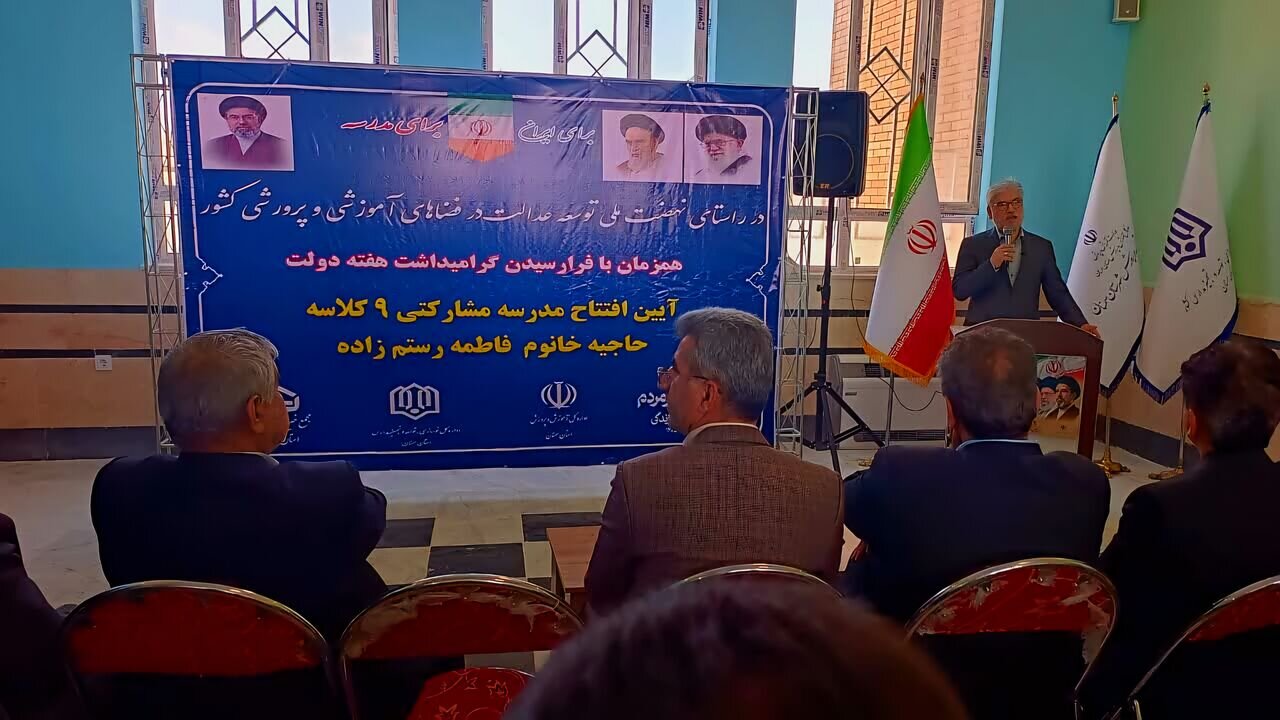
TEHRAN - More than 200 trillion rials (around $100 million) has been provided by benevolent people over the past two years to expand educational facilities across the country, science minister Hossein Simaei-Sarraf has said.
Also, the smartification of 5,000 classrooms has been placed among the government’s priorities, IRNA quoted the minister as saying on Saturday.
Highlighting the importance of educational equity and the expansion of educational facilities, he said that the government has made the development of education and the realization of educational justice among its top priorities.
He added that, in line with these objectives, 4,000 classrooms have been added to the country’s educational infrastructure over the past two years.
The establishment of modern schools has marked a new chapter in Iran’s education system, a development that plays an important role in reducing illiteracy and creating the conditions necessary for the country’s growth and development, Simaei-Sarraf concluded.
The third national event on future schools was held in February, honoring eight top ideas from more than 200 received by the event’s secretariat.
More than 200 ideas were submitted to the secretariat, said Hamidreza Khanmohammadi, the director of the Organization for Development, Renovation, and Equipping Schools, adding that 174 were evaluated and, ultimately, eight were selected.
The space designed and built as a school should be multifaceted, flexible, and equipped with diverse learning environments, with an eye on the future, IRNA quoted Khanmohammadi as saying.
Schools should be a place where students practice living and prepare for a spiritual life, accompanied by progress, he stressed.
The third national event on future schools highlighted the use of modern technologies such as artificial intelligence (AI) and blended learning in fostering thinking skills and creativity, as well as collaboration among the future generation of students.
Future school and the public education system (the role of teacher and student in future schools, modern teaching and learning approaches, schools and students with specific needs); Future school, a center for education and development of community (schools as social institution for the development of the neighbourhood, school’s interaction with cultural, social, and urban institutions); Future school and physical environment (designing green schools, utilizing renewable energies and modern construction technologies); and Future school, equipment, educational technologies (modern educational tools and technologies, AI-based learning platforms, digital infrastructures) were the four key topics of the event.
Technology and knowledge-based companies, consulting engineers, universities and research centers, science and technology parks, professors and students, and researchers in technical, engineering, humanities, art, and psychology fields were among the main target audiences of the event.
Currently, some 16 million students are studying in the country. Throughout the seventh National Development Plan (2023-2027), the Ministry of Education is projected to teach AI to two million students. These include elementary, junior high school, and senior high school students.
Boosting digital literacy will prepare students for future job markets, help them develop their critical thinking, and become familiar with emerging technologies; it will also foster creativity and innovation among students.
Leave a Comment