Restoration work begins at Shah Abbasi caravanserai in Semnan
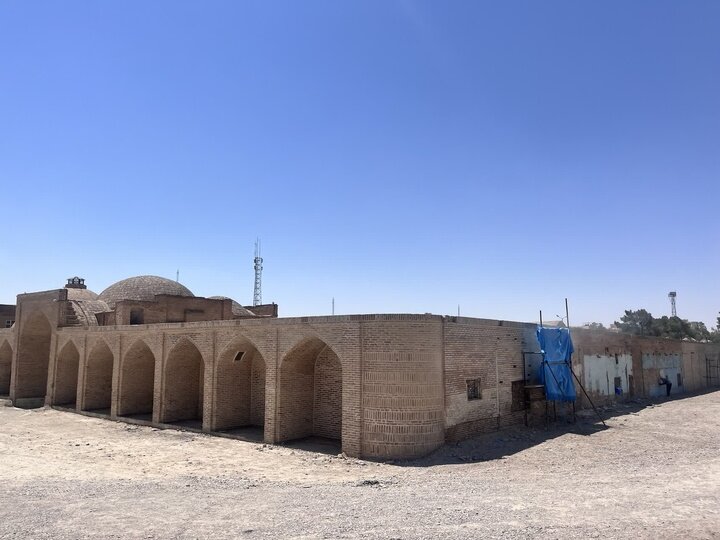
TEHRAN – Restoration and rehabilitation work has begun on a historic Shah Abbasi caravanserai in Semnan, northern Iran, focusing on the structure's northern and western sections, local cultural heritage officials said on Wednesday.
Faramarz Nasiri, head of Semnan's cultural heritage, tourism and handicrafts office, said the project aims to restore and stabilize the exterior of the Safavid-era monument and address damage to parts of the building.
"The Shah Abbasi Caravanserai, as one of the city's significant historical monuments, requires continuous protection and maintenance," Nasiri said.
According to Nasiri, the current phase of restoration is concentrated on the northern and western facades of the caravanserai in an effort to repair existing damage and improve the monument's appearance within the urban landscape.
The work includes repairs to damaged walls, restoration of brick facades, treatment of surface coatings and paint layers, and conservation of the wooden entrance gate. Specialists and restoration experts are carrying out the operations with the objective of preserving the building's original architectural features.
Nasiri said the preservation of historical monuments contributes to safeguarding cultural heritage and supports tourism development in Semnan.
The caravanserai dates back to the Safavid period and was registered on Iran's National Heritage List in 1973. According to local authorities, the site was used as a prison for more than four decades before being fully cleared and reopened in the summer of 2025, when walls and later structures that obstructed the original monument were removed.
The monument is one of 999 caravanserais reportedly built across Iran under the orders of Shah Abbas I, the fifth ruler of the Safavid dynasty, who reigned from 1588 to 1629.
The earliest caravanserais in Iran date back to the Achaemenid Empire, which ruled from 550 BC to 330 BC. Their construction expanded significantly during the Safavid era as part of efforts to support trade and travel across the country, including along routes associated with the Silk Road.
AM
Leave a Comment